HOOGWEGT: New Government Ushers in New Policies
HoogWegt Horizon April 2021
As vaccination rollout continues across the United States, thenew Biden administration and the 117th Congress have started topush their policy agendas. Democrats, now control the WhiteHouse, the House of Representatives, and basically the Senate.
When the equally split Senate has a stalemate, Vice PresidentKamala Harris as president of the Senate is given the tie-breakingvote. For now, it appears the top policy issues that will impactagriculture include alleviating hunger, reforming immigration andlabor laws, increasing environmental regulation to help stemclimate change, and improving trade relations.
Passed in mid-March, the $1.9 trillion pandemic relief packagecontains a potential spending budget for USDA of up to $3.6billion for food procurement. Most of the food procurementbudget will be spent on existing programs such as theSupplemental Nutrition Assistance Program (SNAP) and WomenInfants and Children. SNAP has already received a 15% increase inallocation through at least September. In addition, the schoollunch program will be open through summer, feeding as many as12 million children who do not have reliable access to food. TheBiden administration will also work to develop a longer-term planto reduce hunger, which has dramatically worsened during thepandemic.
USDA to Focus on Reducing Climate ChangeIn late February, the U.S. Senate confirmed Tom Vilsack assecretary of agriculture, a position he held under formerPresident Barack Obama. Under Vilsack, USDA will not onlyincrease its focus on making sure every American is well fed butalso on agriculture’s role in pollution and climate change. In lateMarch, Vilsack said a main priority of USDA will be to determinethe feasibility of setting up, executing, and paying for a federalcarbon bank to help farmers reduce greenhouse gas (GHG)emissions and reward them for doing so. He also noted thatUSDA will look for ways to compensate farmers who incorporateclimate-smart ag practices into their operations. This is adramatic shift from Trump administration policy, which rolledback many environmental rules and regulations.
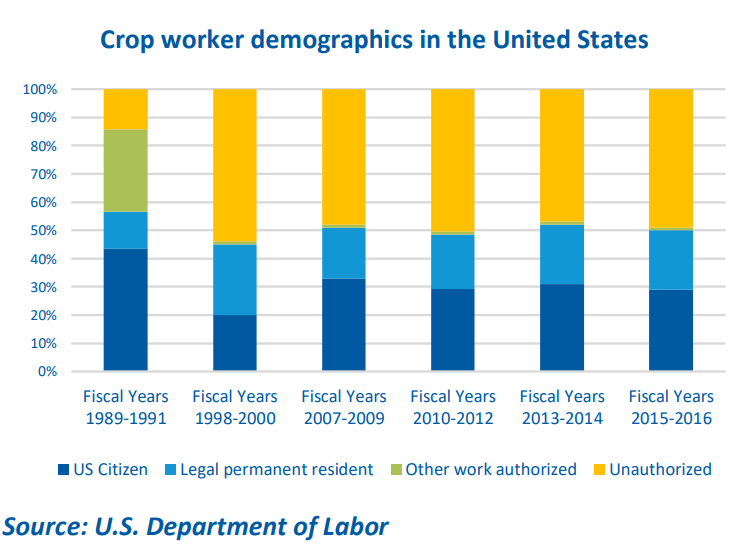
While another policy issue, immigration and labor reform, hasbipartisan support, how exactly to confront changes to currentpolicies that have created decades of frustration has challengedthe government for decades. While the Biden administration andCongress seek to reform immigration, a developing situation atthe southern border involving unaccompanied minors hasreprioritized long-term change. That said, the House passedseveral immigration measures last month, and the Senate isexpected to introduce its own version of the Farm WorkforceModernization Act this spring to address widespread shortages ofexperienced farm and food production labor as well as risinglabor costs.
Like Vilsack, Biden’s new U.S. Trade Representative Katherine Taireceived a swift bipartisan confirmation. Despite the pandemic,U.S. dairy had its best trade year on record in 2020, but theindustry will continue to look for more export opportunities.
Dairy exporters and food manufacturers can expect to see moreconsistent sales as the Trump administration’s trade waratmosphere gives way to pro-trade rhetoric. Tai has said theUnited States is not ready to lift tariffs on China but she is opento trade negotiations with Beijing. Tai is also expected to work tocorrect trade issues with Mexico and Canada and strive to levelthe playing field with Oceania and Europe through multilateraland/or bilateral agreements.
World Comment
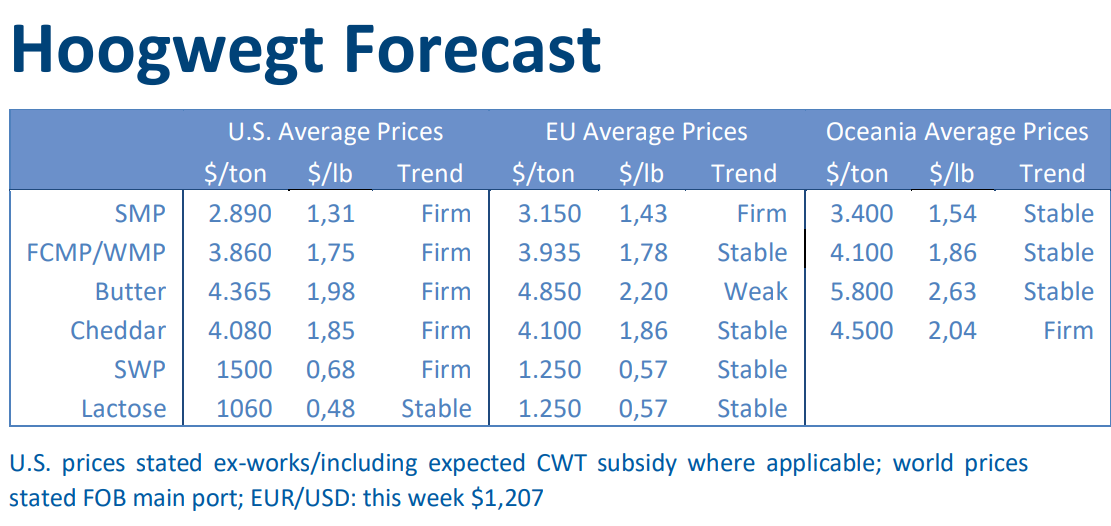
If we look at the global market balance, we can argue that Covid-19 had less impact ontotal demand than expected at the start of the pandemic. By the end of 2020 stock levelshave been decreased and the big question remains. Will supply be able to keep up with thedemand in order to prevent prices from rising even further?In the US we’ve seen a very strong H1, with supply growth of about 2,5-3% yoy. H2 will bemore challenging due to the strong H2 in 2020 and the increasing feed prices, impacting the feed intensive US production. Oceania hasexperienced a strong season in both Australia and New Zealand. For the new season expectations are on the conservative side, mainlybecause of the strong 2020/2021 season. The expected large impact of higher feed prices on the Latin American production seems limitedin the end. Also due to sufficient availability of feed that cannot be exported, that now is available at acceptable levels. It has to be said, theoutlook for next season isn’t great. EU growth is disappointing during the start of the season. Growth in Ireland and Eastern Europe mightbe larger than 1%, but Western Europe will most probably not exceed growth over 0,5%.
Government and Consumers Align Green
As Congress and the Biden administration shift their focus toreducing GHG emissions, the dairy industry will be forced toadopt a course that more closely aligns with these goals. Whilethe negative impacts from dramatic weather events in recentyears have been undeniable, some in agriculture are stillreluctant to attribute these events to climate change, but theywill have to accept that Trump’s regulatory rollbacks were shortlived respites only. The new administration has enlisted USDA toconvince farmers of the benefits of reducing GHG emissions, butVilsack and his staff will face many hurdles before obtainingwidespread acceptance of stricter environmental oversight.
As the U.S. government brings climate change and newtechnologies back into focus, consumers have been giving an oldtechnology a new look. Extended shelf-life (ESL) dairy productsare experiencing some of the best growth rates compared tomore traditional high-temperature-short-time (HTST) products.
While ESL products are commonplace throughout the world, theUnited States has relied on HTST products because access torefrigeration has not been an issue. Amid a global pandemic,however, Americans have been giving ESL products another look.The dramatic shift to online ordering has also limited the flow ofHTST products, and consumers are attracted to ESL products withenhancements such as high-protein or low- or no-lactose levels.
In the United States, almond beverage holds a 70% share of allmilk-alternatives, with oat beverages growing quickly. Whilethese products have made a “green” appeal to consumers,market trends look similar to those of traditional dairy productsas market share expands. Furthermore, almond beverages havecome under scrutiny due to the crop’s excessive need for water.
Still, consumers are reaching for these products believing theyare more environmentally friendly than dairy, and the inroadsthey have made are not expected to reverse.