HoogWegt: Well Intentioned Subsides can Distort Markets
HoogWegt Horizon September 2020
For decades, suppliers of dairy products have been working to ratchet down subsides to be more competitive in today’s complex global food system. But with Covid19 still raging around the globe, governments have taken new measures to support their dairy industries to ensure a ready supply of product for their citizens. The pandemic aid is in addition to other programs that help support dairy producers,particularly in Europe and the United States. Regardless of how well intentioned, efforts to support the dairy industry are often misguided,and instead of helping those intended, they actually can end up distorting markets.
The global dairy industry is still heavily protected, particularly in India, Europe, and North America. Subsidies in India, a relatively self sufficient market, will become more of an issue if and when the country needs to import large quantities of product to feed it citizens,whereas subsidies in Europe and North America are often called into question by global competitors. The benefits of subsidizing agriculture are immediate for producers, processors, and consumers, but over the long term, the costs can be high.
Who benefits from subsidies?
All nations want a secure and ample food supply for their citizens. While subsidizing milk production helps to ensure an affordable and steady supply of fresh and nutritious dairy products, consumers pay for this privilege through higher taxes. Processors in subsidized markets also are assured a steady supply of milk but typically at a higher base cost. Dairy producers benefit from stable milk prices in the short term, but the advantage disappears when domestic prices climb above world prices. In addition, subsidies tend to delay the exit of inefficient milk producers, keeping supply higher than it would be in a free market system.
Often welli ntentioned protectionist measures haunt markets for months, if not years. Former EU milk quotas as well as government buying programs are prime examples. In an effort to protect European dairy producers from massive market declines in the first 12 months post quotas, the European Commission reopened the Intervention buying program in 2015 at prevailing price supports of €1,698/metricton. This combined with higher butter prices encouraged milk production growth, which depressed global milk protein prices for several years and resulted in massive inventories that just cleared last year.
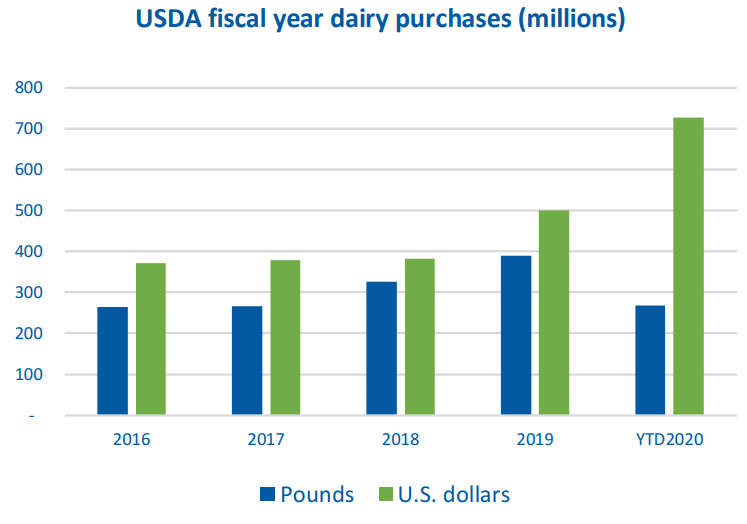
Emergency aid can also distort markets. For instance, in the United States following COVID19 lock downs, the government provided billions of dollars to U.S. dairy producers to prevent the collapse of the industry and ensure milk and other dairy products continued to reach consumers. Dairy subsidies were provided in the form of food aid to unemployed workers and direct payments were given to producers. At the same time, cooperatives instituted supply control programs. This resulted in record high cheese prices. These record high cheese prices did little to help U.S. dairy producers and consumers. Due to a 2019 change in the Class I (fluid milk) price formula and the ability of cheese processors to step in and out of the federal order system to avoid having to pay minimum prices, producers in many markets saw deductions of nearly $10/cwt. from their pay prices, and consumers paid more for cheese.
Examples of less market distorting subsides that governments can and often do implement include crop insurance and revenue protection programs and subsidies to help producers comply with new environmental regulations, upgrade their facilities, or learn new management practices.
World Comment
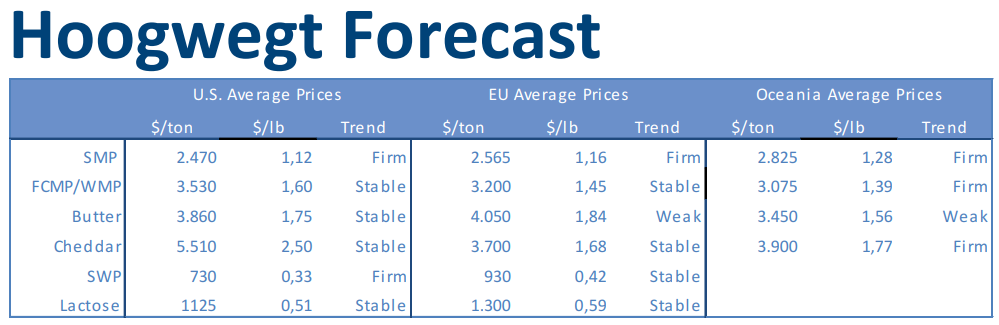
The EU is showing higher week on week production figures since the heat wave in August. Because of this and favorable farm gate prices,the expectation is that the year will end with 1,5% growth. In the US we’ve seen strong output in the month of August. Despite the crisis in California, the milk supply is still seeing a 1,8% growth. The season in New Zealand has started better than expected as well. In August milkproduction was showing a growth of 5%. Although it’s hard to give firm figures on China’s milk supply, milk production increased less than earlier expected. This assumption is strengthened by the strong Chinese imports in the previous months. Yili and Mengniu are reporting strong growth in liquid dairy sales of 23% and 19% respectively.Focusing further on the demand side, we see that consumption has been impacted a lot less by the COVID19 crisis than initially assumed.
The forecast is that total dairy demand in the EU will grow in 2020 and the US consumption is likely to decrease by 0,35% only. Mexico imports are currently strong and is partly making up for the weak imports during the start of 2020.
Pandemic Aid to Boost Output as Demand Flounders
The corona virus pandemic will eventually end, and economies will recover. While that timeline has yet to play out, piles of debt could soon prevent governments from continuing pandemic aid at current levels, particularly in the United States and Europe. Still, the sheer volume of pandemic aid already provided to dairy,especially in the United States, will likely encourage more milk production at a time when dairy demand remains tenuous.
At the same time, governments around the world continue to implement rolling lock downs as students, workers, and others test positive for COVID19. The large volume of dairy products that typically moves through restaurants and schools—while returning in some locations—is still far below pre pandemic demand levels. Until there is a vaccine against COVID19, these rolling lock downs will likely continue to occur, further disrupting dairy demand.
As growing milk supplies collide with weak demand and dwindling subsidies, producers could eventually see much lower milk prices. The expectation of a growing surplus already has some in the United States and Europe pushing for milk supply reduction and/or control programs to prevent milk prices from dipping so low that farm bankruptcies rise to unacceptable levels.
While governments need to ensure their food suppliers and processors remain viable for the long term, subsidies often violate trade regulations and keep prices artificially high, harming a region’s competitiveness in world markets. Thus, when well meaning governments step in to change the direction of markets in an effort to protect their producers from low prices or shield citizens from soaring retail prices, they run the risk of delaying the market signals producers need to keep global milk supplies balanced.