
HoogWegt: Whey’s Health Benefits Dwarf the Myths
HoogWegt Horizon February 2021

Once considered a feed product, at best, and a waste product ofcheese manufacturing, at worst, whey today is accepted as oneof the most complete forms of protein available to humans.
Whey is used heavily in nutrition products for infants and theelderly, sports foods and beverages, and a host of other productsfor people of all ages and needs.
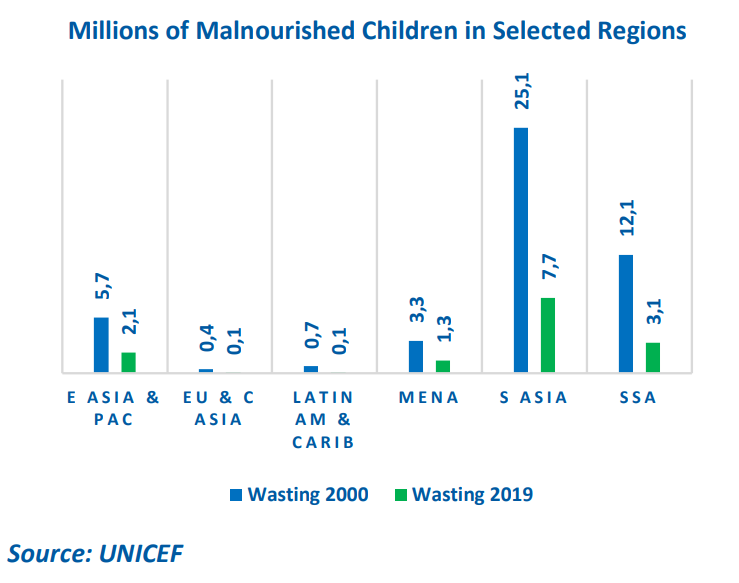
An estimated 1 billion people worldwide do not consume enoughprotein, and the situation could worsen as climate changeaccelerates. While malnutrition is most severe in parts of CentralAfrica and South Asia, even in some of the world’s wealthiestcountries, some populations suffer from inadequate proteinintake. In the United States, for example, more than one in threeadults aged 50 or older don’t eat enough protein, according torecent studies.
Backed heavily by science, whey has long been used in infantnutrition. According to the American Academy of Pediatrics,about 60% of the protein found naturally in human breast milk iswhey protein. Alpha-lactalbumin, a type of whey protein, haslong been a key component in infant nutrition products.
Infant Formulas Constantly Improving
Typically, the protein portion of infant formulas has consisted of80% whey and 20% casein, but manufacturers continue to offernew and better formulations. Some of these products now offerwhey permeate, which contains galactooligosaccharides (GOS), aswell as the omega-3 fatty acid docosahexaenoic (DHA). GOS areprebiotics that promote growth of probiotic bacteria in the gut,while DHA, found naturally in human breast milk, aids in infantdevelopment.
Research has also proven that whey proteins prevent muscleloss, promote muscle growth, and reduce recovery time afterstrenuous exercise. They also are thought to help ease musclesoreness and boost physical performance, making them one ofthe most popular ingredients in sports nutrition products.
While the science behind the use of whey proteins as a dietarysupplement for the elderly and those deficient in protein, as wellas in infant and sports nutrition products is proven, otherprobable benefits are still being studied. One of these probablebenefits, closely related to muscle health, is whey’s potential toaid in weight loss by helping to maintain muscle mass, boostmetabolism, and suppress appetite.
Other probable benefits of whey consumption that are still beingstudied include its potential to lower blood pressure andcholesterol, helping reduce cardiovascular disease; treat type 2diabetes by reducing blood sugar levels after lunch and dinner;reduce inflammation, which can lessen symptoms ofinflammatory bowel disease; increase bone density; and enhanceantioxidant defenses, boosting the immune system.
This last benefit has received increased attention recently asstudies from Australia and elsewhere showed that consumingwhey protein could help ward off Covid-19 infections and treatactive infections due to the lactoferrin component of whey.
Meanwhile, other studies have shown that whey consumptioninhibits SARS-CoV-2, the virus that causes Covid-19, in breastmilk. However, the food industry remains cautious about thesestudies, and the medical profession stresses they do not meanthat whey consumption provides immunity against Covid-19.
World Comment
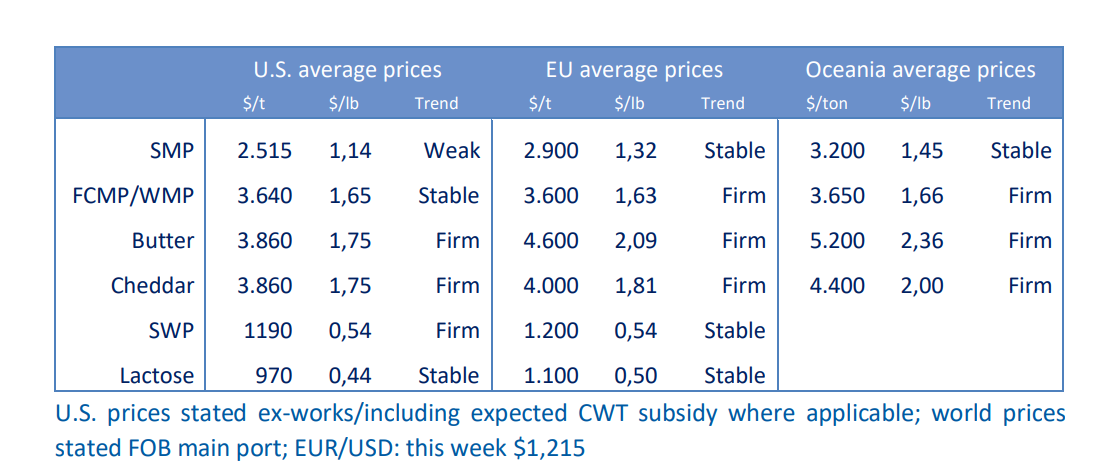
The US is in the midst of a very strong production season. The months of December andJanuary are reporting a 2-3% growth. Mexico’s demand is still slow, so unable to absorbthe surplus that the US currently is creating. As a result, the US is trying to export theadditional volumes elsewhere but is having trouble mainly because of logistical constraints,as well as their inability to produce MH in large volumes. The EU is showing a completely different development. January seems to havenegative growth, mainly because of firm negative growth numbers in France and Germany. A growth of approximately 1% is expected againfrom April onwards. In Latin America we see smaller growth than initially expected. In Argentina and Uruguay we see 0% growth, also becauseof the strong 2020 numbers. The outlook for 2021 in Uruguay is still positive, but for Argentina expectation is that it will end 2021 withnegative growth. Hence global is supply is currently relying on the US for a large part. Most of the product should go to Mexico also becauseof the logistical issues to ship it elsewhere. However, there is serious doubt if Mexico is able to consume this.
Asia-Pacific Rapid Growth Market for Whey
The highly fragmented global whey protein market, estimated at$13.5 billion in 2020, is expected to grow at a compound annualgrowth rate (CAGR) of 6.2% from 2019 to 2027, reaching $17.5billion by 2027, according to Research and Markets. While wheyproteins play a prominent role in dietary protein supplementsand sports nutrition, the infant formula segment claims thelargest share of whey in the foods and beverages category.
As the world’s largest cheese-manufacturing regions, the UnitedStates and Europe are the primary producers of whey proteinsand also the top consumers of these proteins. But demand fromparts of Asia, including China and Japan, is accelerating, with theAsia-Pacific whey protein market expected to grow at a 9.2%CAGR, reaching $1.57 billion by 2025.
The Asia-Pacific market has also seen the rise of products thatcontain both animal and plant proteins, such as dairy almondmilk, which has also been driving demand for whey proteins.
Consumers perceive these products as providing both completeproteins and the benefits of other nutrition-packed foods.
Asia’s older and more increasingly urban consumers are alsorealizing the benefits of staying fit and healthy into their sunsetyears, and this has accelerated demand for proven proteinsources like whey. As this trend continues, demand for wheyproteins should build for this demographic as well.
According to a 2017 Mintel survey, three out of four urbanChinese consumers have developed a habit of participating insport and fitness activities. A separate survey shows 41% thinkprotein replenishment after exercise is important to maintainingan active lifestyle. While the whey protein craze has become wellestablished in China and Japan, India is projected to be the nextmajor growth market.