Hoogwegt: PostBrexit Concerns Replace Brexit Uncertainty
Hoogwegt Horizon march report
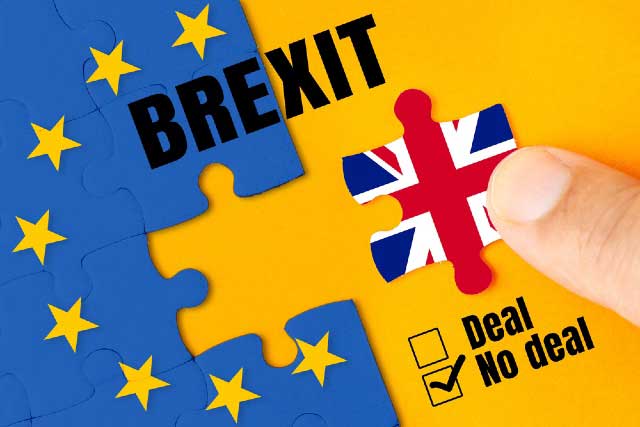
After more than three years of political turmoil, the United Kingdom formally exited the European Union under a withdrawal agreement on January 31. In the short term, little will change.The United Kingdom remains inside the European Union’s single market and customs union, trade is unimpeded, and free movement of people remains in place. This is a temporary arrangement until the post Brexit transition period ends December 31, 2020. Once again, a cliff edge situation, similar tot hat seen in 2019, could occur if negotiations continue into 2021.
The parties will use transition to negotiate future trading arrangements. The timeline is ambitious—especially with the significant social and economic impacts of COVID19—and if a trade deal is not in place on January 1, 2021, UK trade defaults to World Trade Organization (WTO) rules, with tariffs levied on goods and little cooperation expected to achieve smooth border checks, which is the same as a no deal Brexit. If terms are not reached, given the intertwined supply chains, both sides would need significant preparation to cope with the economic fallout on top of that already being felt.
The Irish Protocol, a late change to the Withdrawal Agreement,avoids a hard border on the island. Northern Ireland effectively remains in the European Union’s single market for goods and will apply EU customs rules, so that no regulatory controls, tariffs, or customs formalities will apply at the land border between Northern Ireland and Ireland. Controls will instead apply to goods coming from Great Britain to Northern Ireland and only face tariffs if they are at risk of crossing into Ireland.
United Kingdom’s Trade Ambitions
The European Union and United Kingdom have each signed off on negotiating mandates ahead of trade talks. The United Kingdom seeks a “Canada style” free trade agreement, removing tariffs and quotas on goods and services. However, the United Kingdom’s wish to remove the requirement to comply with all EU regulations, a major motivator for Brexit itself, will be a major point of difference in forging a deal this year.While negotiation of the future trading relationship will be a major focus of transition, a key part of the UK government’s Brexit agenda is to strike trade arrangements outside the bloc. To date, it has signaled intentions to commence negotiations with the United States, Canada, Australia, and New Zealand. To improve its appeal in these potential negotiations, the government proposes a new Most Favored Nation (MFN) tariff schedule, which it hopes will come into force January 1, 2021.
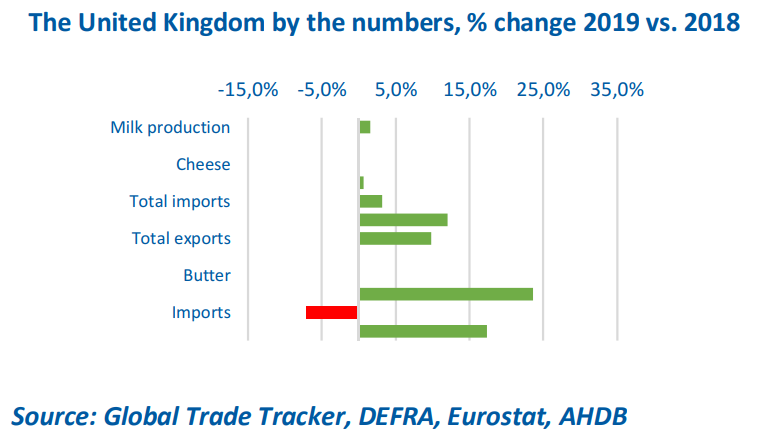
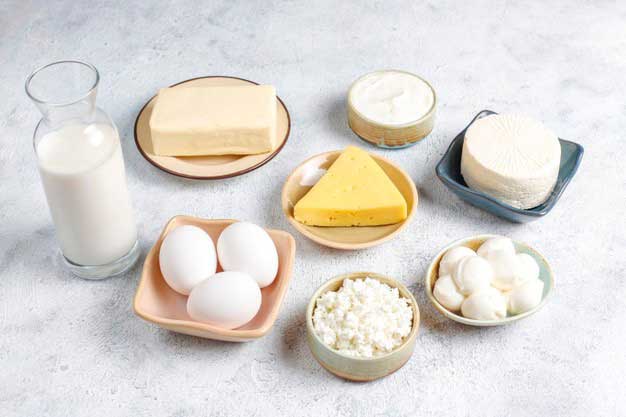
Much is at stake for dairy trade. The United Kingdom is the biggest cheese importer in the world, importing 523,000 metric tons (MT) of cheese in 2019, 99.5% sourced from the European Union. Since the Brexit vote in 2016, growth in cheese trade has increased. UK cheese imports grew at an average annual 1.2%from 2010 to 2016 but expanded at three times that rate in the three years prior to 2019. Meanwhile, butter trade slumped in 2019.
Trade dependence in dairy is two way, and the UK dairy sector depends heavily on continued free tariff exports to the European Union. The United Kingdom is a major cheese exporter, with shipments exceeding 200,000 MT in 2019, 81% of which went to EU member states. The European Union also took 87% of UK butter exports last year.The cross border trade between Northern Ireland and Ireland is also crucial to Northern Ireland’s dairy farmers and Ireland’s processors. About 800 million kilograms of Northern Ireland’s raw milk crosses into Ireland for processing each year.
World Comment
The COVID19 crisis starts to show its global impact. People have started hoarding worldwide, due to partial or full lock downs in many countries and states. Dairies are faced with a sharp increase in demand from their retail clients, however a complete stand still in demand from the food service industry. On the supply side, it’s ‘business as usual’. In January 2020 supply has grown by 1% in the major export regions like Germany, France, and the Netherlands. All major exporting countries have grown in the beginning of 2020, except for the UK. The milk production is currently showing a decline of 3.5%. Further supply growth is not likely though. The impact of COVID19 has appeared in global prices, which is not encouraging farmers to make investments in their production capacity. The season is New Zealand comes to an end sooner than expected due to the draught on the Northern Island. The dry conditions seems to have zero to none direct effect on prices, since COVID19 is taking full control over the dairy market. Major question will be, can the increase of home consumption compensate for the lack of demand in the food service industry?
The Countdown has Resumed
Post Brexit uncertainty could once again impact dairy markets.The turmoil of the political process leading up to Brexit saw cheese imports in the United Kingdom spike twice in 2019, during the first and fourth quarters, as the extended impasse threatened a no deal exit.The risks of further upheaval hinge on negotiations between the European Union and the United Kingdom, which began in late February, but which will certainly be derailed by efforts to manage COVID19. A summit is proposed for June between the United Kingdom and the EU27 to finalize the new trade relationship between the two parties, which is scheduled to begin at the end of 2020.The United Kingdom has until the end of June to request an extension of the transition period beyond 2020. However, Prime Minister Boris Johnson has pledged not to request an extension.In reality, both parties need to agree to the principles of a new trade deal fairly soon because it must be presented to the European Parliament for approval by November if transition is to be completed by December 31. It is likely that not all arrangements will have been addressed by the end of 2020. Thus,in some areas, the European Union will adopt stop gap measures.In any event, it seems frictionless trade past 2020 is not the United Kingdom’s preference, given its recent policy announcement that full customs checks will be required on all goods coming in from the European Union.Because nearly 80% of the UK’s food imports come from the European Union, the UK food industry has recently repeated earlier warnings that failure to reach a tariff free agreement with the European Union will result in much higher food costs for UK consumers.